MONTREAL · WEST ISLAND · DORVAL · POINTE-CLAIRE · BEACONSFIELD · PIERREFONDS · LAVAL · CHATEAUGUAY

Couvreur PrécisionRoofing inc. Montreal & suburbs450-531-7032

Shingle roofs are our main work here

Shingle roofing in the West Island

The West Island is where we replace the most shingle roofs. Bungalows, split-levels and two-storey family homes, on streets full of big old trees, and a lot of them built in the same few decades.

Houses built in the same years tend to need new roofs in the same years too, so on many West Island streets the first roofs are long gone and the second ones are getting tired. Add the trees, the winters and attics that were never insulated for today’s standards, and you get the same few problems on house after house.

We replace shingle roofs from the deck up, fix leaks around chimneys, vents and skylights, put in gutters and soffits, and fix the attic insulation and ventilation so the ice dams stop coming back. This page covers how we do it, what to watch for on your own roof, and what we see town by town.
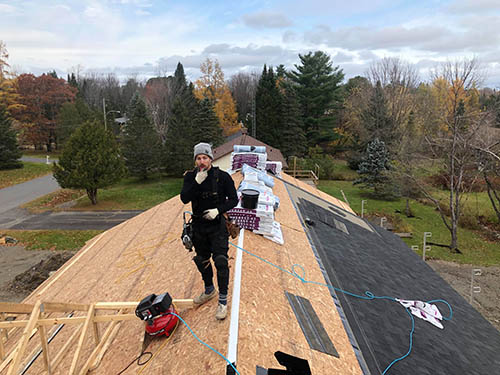
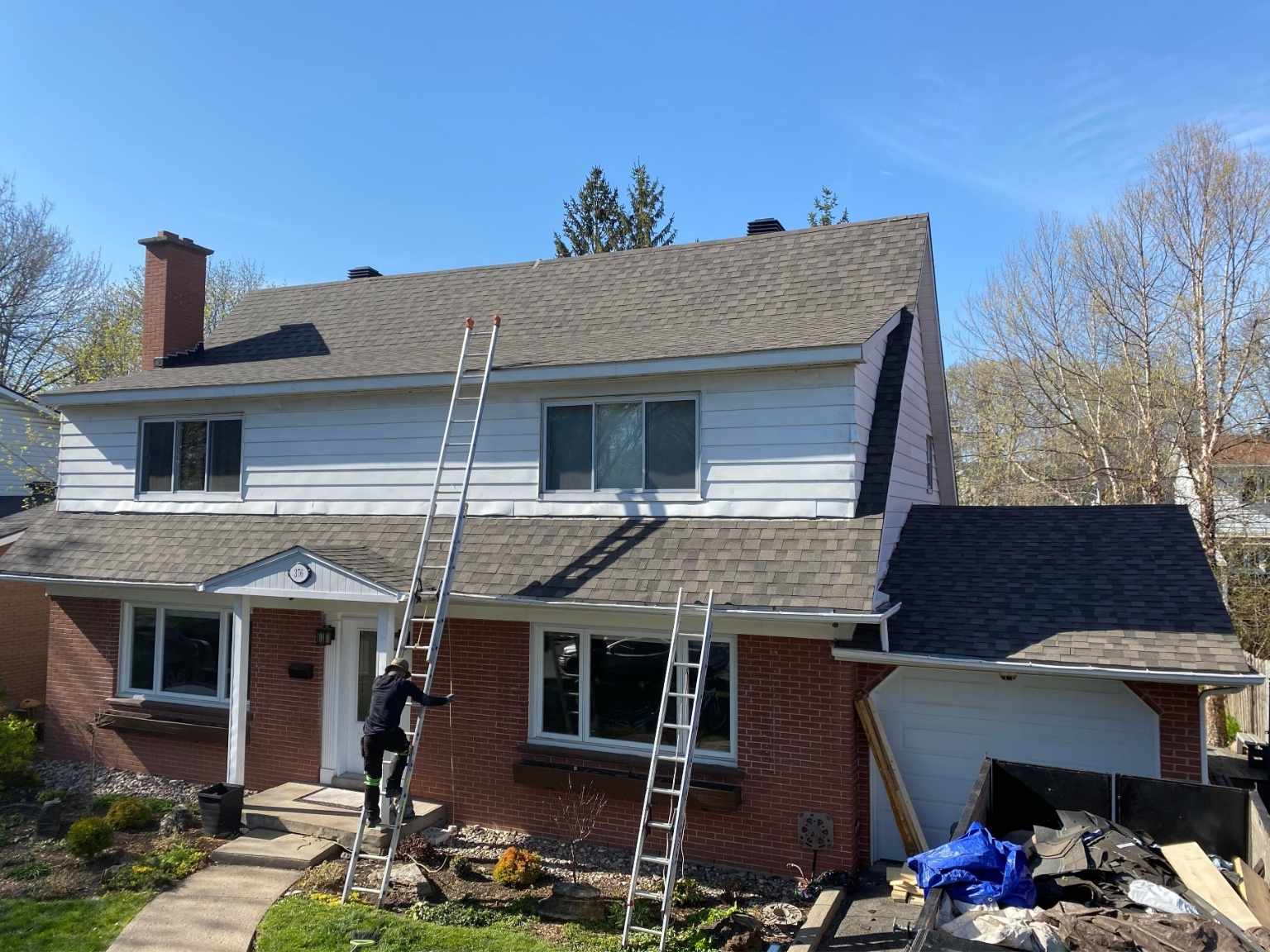
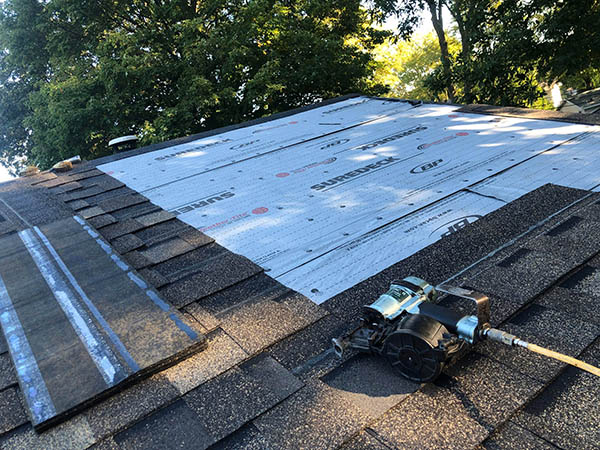
A West Island-style roof stripped to the deck, with new membrane going onA full shingle roof replacement on a family home

The roofs we see here

  • Asphalt shingles on bungalows, split-levels and two-storey homes
  • Low-slope sections over garages, carports and additions
  • Valleys and roof-to-wall joints where split-levels step up and down
  • Aluminum gutters, soffits and fascia
  • Attics with thin, settled or blocked insulation

What usually goes wrong

  • Ice dams and water backing up under the shingles at the eaves
  • Curling, cracked or bald shingles on older roofs
  • Gutters clogged by leaves and maple seeds
  • Moss and dark streaks on shaded slopes
  • Leaks around chimneys, plumbing vents and skylights
  • Soffit vents covered over, so the attic can’t breathe

Town by town

The West Island isn’t one place. Here’s what we tend to find on the roofs in each town. We work in all of them, and in Senneville and the rest of the west end too.

Dorval

Many post-war bungalows and split-levels, a lot of them on their second or third roof. Low-slope sections over garages and back additions are where we find most leaks.

Pointe-Claire

From the old houses near the village and the lake to the family streets north of Highway 20. Big trees, steep roofs on the older homes, and gutters that fill up every fall.

Beaconsfield

Large lots and tall trees. Shade keeps parts of the roof damp, so moss, streaks and worn shingles on the north side are common, along with gutters full of leaves.

Kirkland

Mostly two-storey homes from the 1970s to the 1990s, with bigger roofs and more valleys, dormers and roof-to-wall joints. Many are now due for their first or second replacement.

Dollard-des-Ormeaux

Street after street of split-levels and two-storey homes built around the same time, so neighbours often need new roofs within a few years of each other.

Pierrefonds-Roxboro

Bungalows and split-levels from the 1960s and 70s, plus newer developments to the west. Ice dams and tired original attics are the usual story.

Sainte-Anne-de-Bellevue

Older village houses near the water, with steeper roofs, dormers and chimneys that need careful flashing, next to newer streets of shingle homes.

Baie-D’Urfé

Larger homes on wooded lots. Long roof lines, lots of leaves, and attics that are worth checking whenever the roof is redone.

L’Île-Bizard

Bigger houses with more complex roofs, many valleys and plenty of trees. Getting the valleys and flashings right is most of the job.

Signs your shingles are done

You don’t need to climb up there. Most of these you can see from the ground, from a window, or in the attic.

  • Shingle edges curling up or the middle cupping down
  • Cracked, torn or missing shingles after a windstorm
  • Bald patches, and lots of granules in the gutters or at the bottom of the downspouts
  • Moss or dark streaks spreading on the shaded side
  • Water stains on the ceiling, or damp spots on the attic deck after rain or a thaw
  • Ice building up along the eaves every winter
  • A roof that’s around 20 years old or more and has never been looked at

One or two of these may only need a repair. Several at once usually means it’s time for a new roof. Either way, we’ll tell you which.

New shingles going on over fresh underlayment

How we replace a shingle roof

A shingle roof is only as good as what goes under it. Here is how we do a full replacement, step by step.

  1. Protect the house We protect gardens, shrubs and the lawn around the house before the tear-off starts.
  2. Tear off down to the deck All the old shingles come off. We don’t shingle over an old roof: it hides damage we need to see, and the same problems come back.
  3. Check and fix the deck With the roof open, we look for soft or rotten boards and replace what needs replacing before anything goes over it.
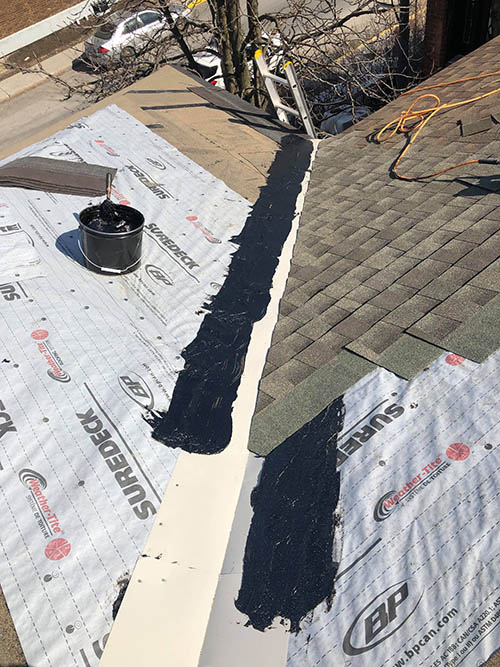
  4. Ice-and-water membrane Self-adhering membrane along the eaves, in the valleys and around chimneys, vents and skylights, where ice dams and melting snow do their damage.
  5. Underlayment over the rest The whole roof is covered before the shingles go on.
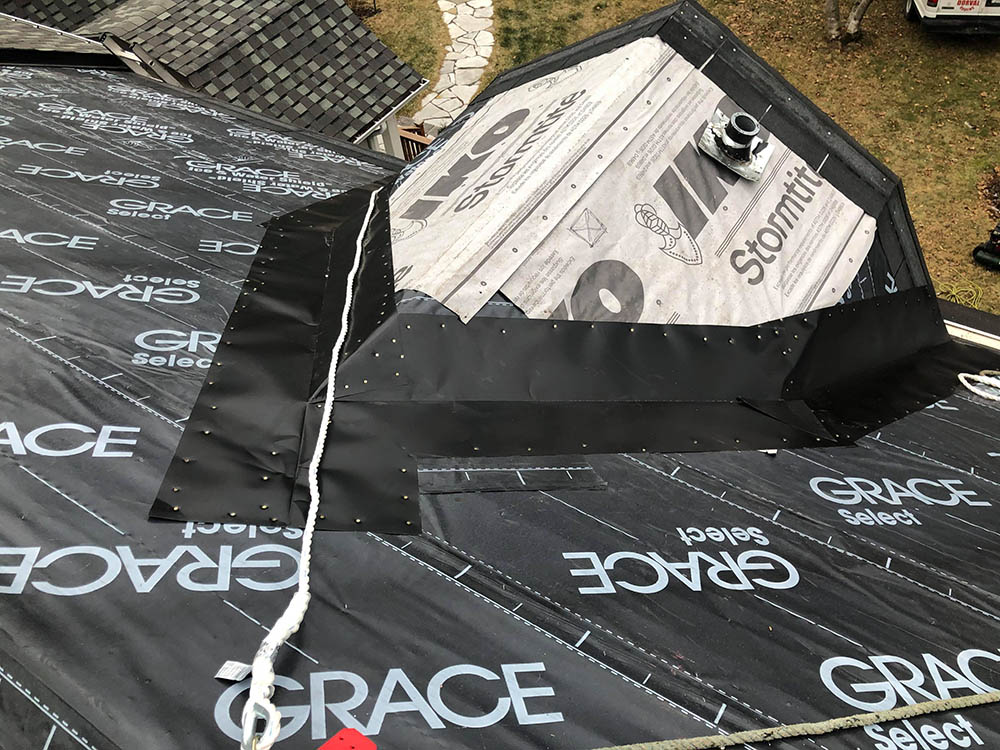
  6. Drip edge and flashings New metal at the edges, and new flashing wherever the roof meets a wall, a chimney or a skylight. We match the flashing colour to the house.
  7. Shingles Nailed in an overlapping pattern, the way the manufacturer specifies, with the ridge capped and sealed.
  8. Ventilation We check that air can come in at the soffits and out at the top, so the attic stays cold in winter and the shingles don’t bake in summer.
  9. Clean-up We clean up as we go and leave the yard the way we found it, besides the new roof.
Membrane and underlayment going down before the shingles

Ice dams: why the West Island gets them

An ice dam starts in the attic, not on the roof. Heat leaks up from the house, warms the roof deck and melts the snow on top. The water runs down to the eave, which hangs out past the warm walls and stays cold, and it freezes there. The ice builds into a ridge, the next meltwater backs up behind it, and it works its way under the shingles and into the walls and ceilings.

Many West Island homes were built when attics got a lot less insulation than they do today, and over the years it settles or gets wet. Soffit vents often end up covered, so the attic can’t vent the heat out. That’s why the same houses get ice dams every year.

Ice-and-water membrane at the eaves limits the damage, and heat cables can keep a channel open, but neither fixes the cause. The fix is a cold attic: air sealing, enough insulation and a clear path for air from the soffits to the top of the roof.

If you have an ice dam now, don’t chip at it with an axe or an ice pick. That’s how shingles get torn. Call us and we’ll look at it.

Ice-and-water membrane in a valley, where melting snow runs

Choosing your shingles

Most of the roofs we put on in the West Island are architectural shingles, the thicker, layered kind that has largely replaced the old flat three-tab look. They hold up better to wind and give the roof more depth from the street.

The brands we install most are IKO (Cambridge and Dynasty), GAF Timberline HDZ and BP Mystique. Each has its place. Under big trees, a shingle with algae resistance is worth asking about, because shaded roofs streak and grow moss faster.

Colour is your call. We’ll bring samples and help you pick one that suits the brick and siding.

What you can count on

  • A minimum ten-year warranty on our work, and we answer every warranty call
  • The shingle manufacturer’s own warranty on top of ours
  • Licensed by the Régie du bâtiment du Québec (RBQ)
  • Most projects start within one to three weeks; it can take longer in the fall and winter
  • You don’t need to be home unless we have to work inside
  • Financing plans, and you can pay by credit card

Each West Island town has its own rules for roof work. Check with your town hall before a replacement. We can give you the specs and details they ask for.

Common questions

Why do I get ice dams every winter?

Heat escaping into the attic melts the snow on the roof, and the water refreezes at the cold eave. Better insulation and ventilation fix the cause; heat cables only treat the symptom.

Repair or replace my shingle roof?

We’ll tell you honestly after an inspection. If the roof has good years left, we repair it.

Can you put new shingles over the old ones?

We don’t. Shingling over an old roof hides rot and damage we need to see, adds weight, and the same problems come back.

How soon can you start?

Most projects start within one to three weeks. Wait times can be longer in the fall and winter.

Do I have to be home while you work?

No, unless we need to get into the attic or the house. Most of the time we just need access to the yard.

Will you wreck my garden?

We protect gardens, shrubs and lawns before we start, and we clean up as we go.

What warranty do I get?

At least ten years on our workmanship, plus the manufacturer’s warranty on the shingles. If something goes wrong, we come back and fix it.

Do you work in my town?

Yes: Dorval, Pointe-Claire, Beaconsfield, Kirkland, Dollard-des-Ormeaux, Pierrefonds-Roxboro, Sainte-Anne-de-Bellevue, Baie-D’Urfé, L’Île-Bizard, Senneville and the rest of the West Island.

Should I redo my gutters and soffits with the roof?

If they’re tired or the soffit vents are blocked, it usually makes sense. The roof edge is already open, and clear soffits are part of keeping the attic cold.

Can I pay over time?

Yes. We offer financing plans, and you can also pay by credit card.

Contact

Roof trouble in the West Island?

Please phone or e-mail us and we shall be pleased to answer any questions you may have.

450-531-7032

Call us Free estimate